Cop On - What COP31 Is Talking About and Why Power Matters
COP31 opens this week in Antalya, Türkiye, with fewer people attending and less urgency, a bit like a partly deflated party balloon. The science has never been clearer, yet the goal is now “limiting the overshoot”, and spending is shifting from prevention to protection.
5 min read time
COP31 opens this week in Antalya, Türkiye,with fewer people attending and less urgency, a bit like a partly deflated party balloon. The science has never been clearer, yet the goal is now “limiting the overshoot”, and spending is shifting from prevention to protection.
Türkiye hosts the summit and runs the Action Agenda while Australia chairs the negotiations.
Five things on the table
- Electrification. The “35 by 35” pledge would lift electricity to 35% of final energy use by 2035.
- Climate finance. Developing countries wanta new work programme and fairer burden-sharing.
- Just transition. The mechanism agreed in Belém now has to made work in practice.
- Adaptation. The 59 indicators need refining, and the pledge to triple adaptation finance needs securing.
- Global stocktake. The second stock take begins. Only 153 parties have submitted new national plans so far.
Why power is at the centre
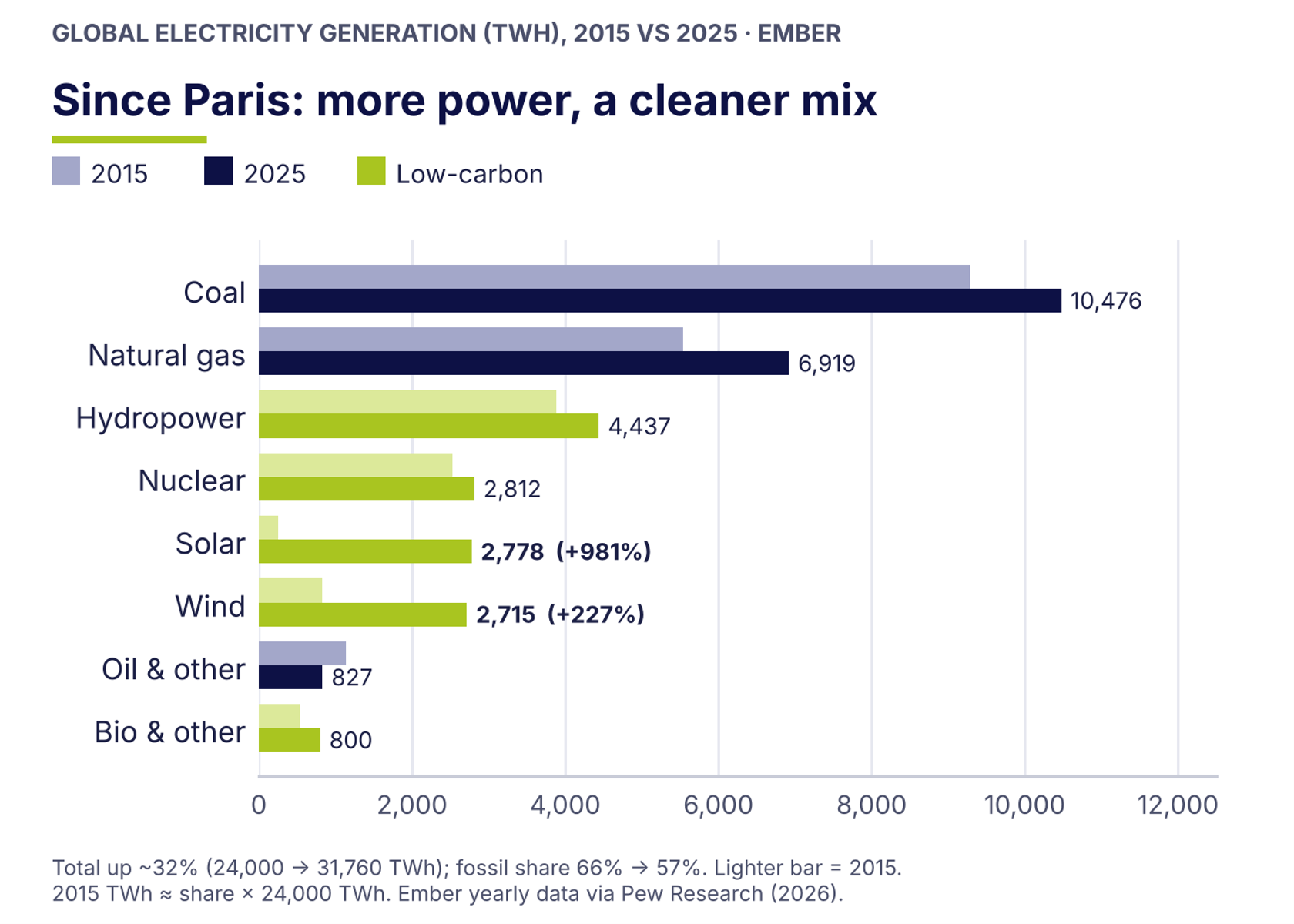
Electrification has been our most effective answer to climate change so far. Since Paris, electricity generation has grown 32%, but power-sector emissions have grown only 14%, and emissions per MWh have fallen 14%. Solar grew roughly tenfold and wind more than tripled, which cut the fossil share of generation from 66% to 57% (Figure 2). Data centres and crypto account for about 6% of the 32% growth.
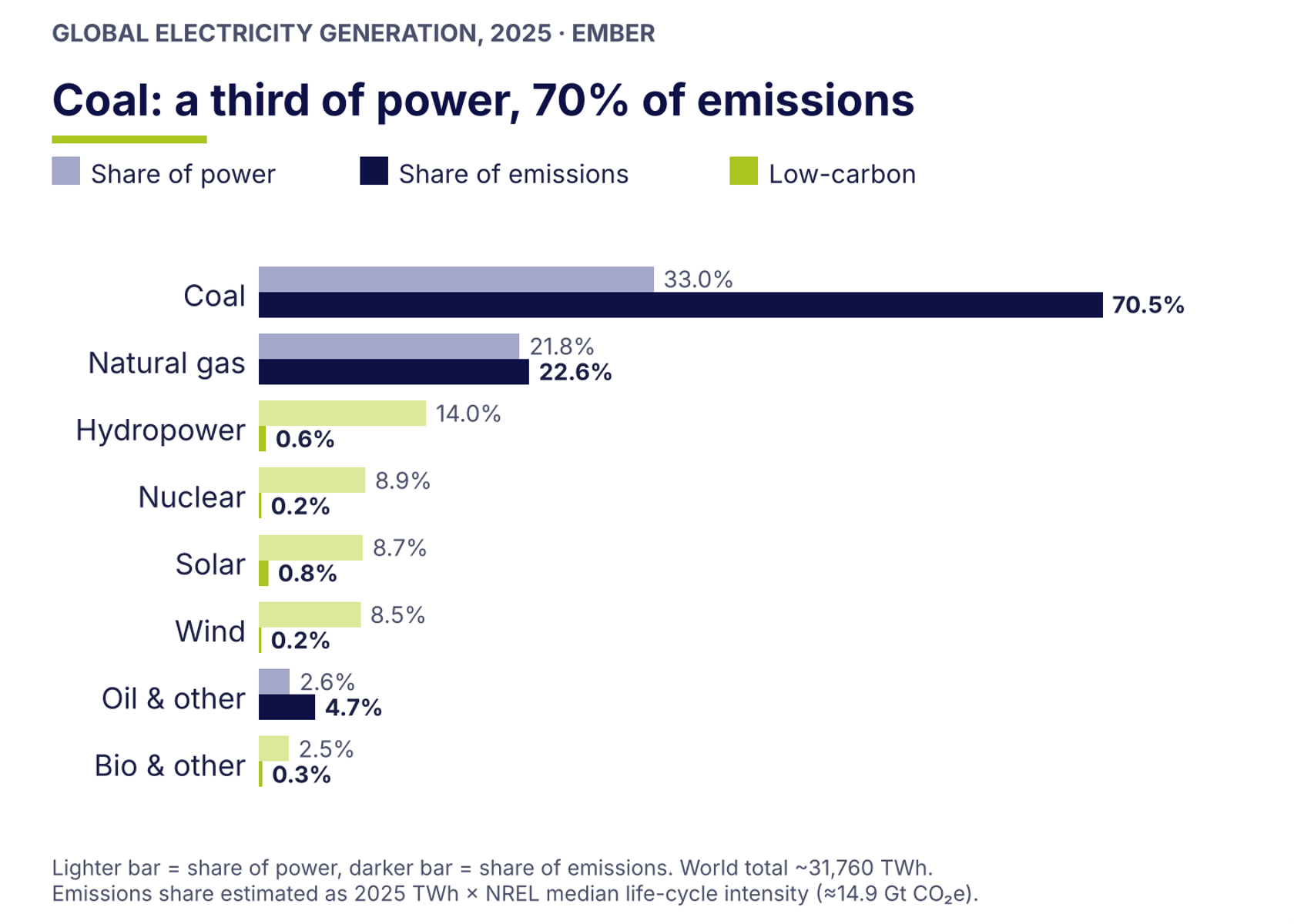
Coal is still the problem. It makes a third of the world’s power but around 70% of power-sector emissions (Figure 1), and emits about 77 times more CO₂e per MWh than wind. Five countries hold nearly three-quarters of the world’s reserves, but as my Granny would say, “that does not make them bad people.” What matters is what we burn.
Renewable electrification is the key both to cutting emissions and to fairness, and solar is already changing lives in the world’s poorest communities.
Figure 1. Global generation and emissions share, 2025 (Ember).
Figure 2. Global electricity, 2015 vs 2025(Ember).